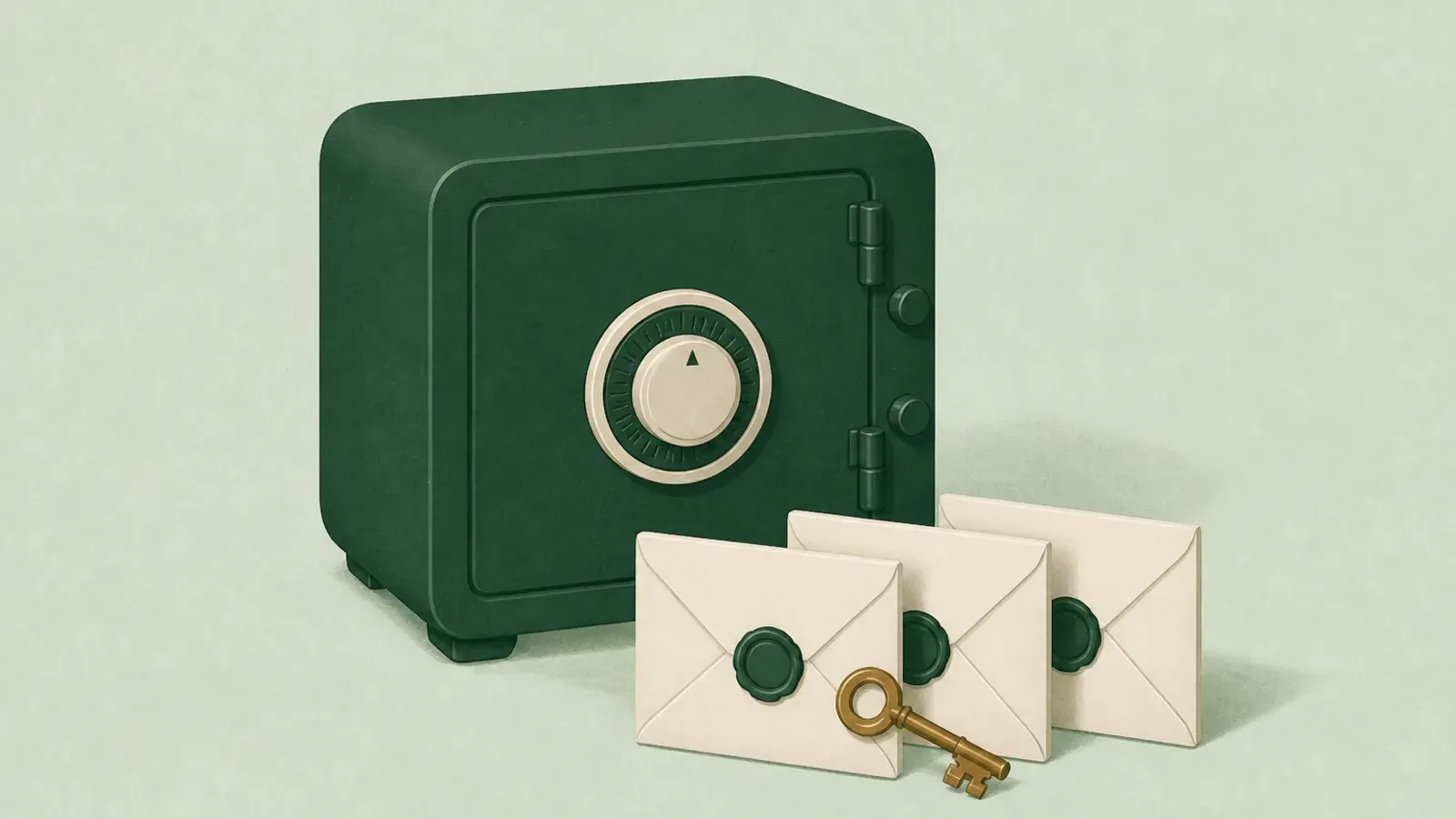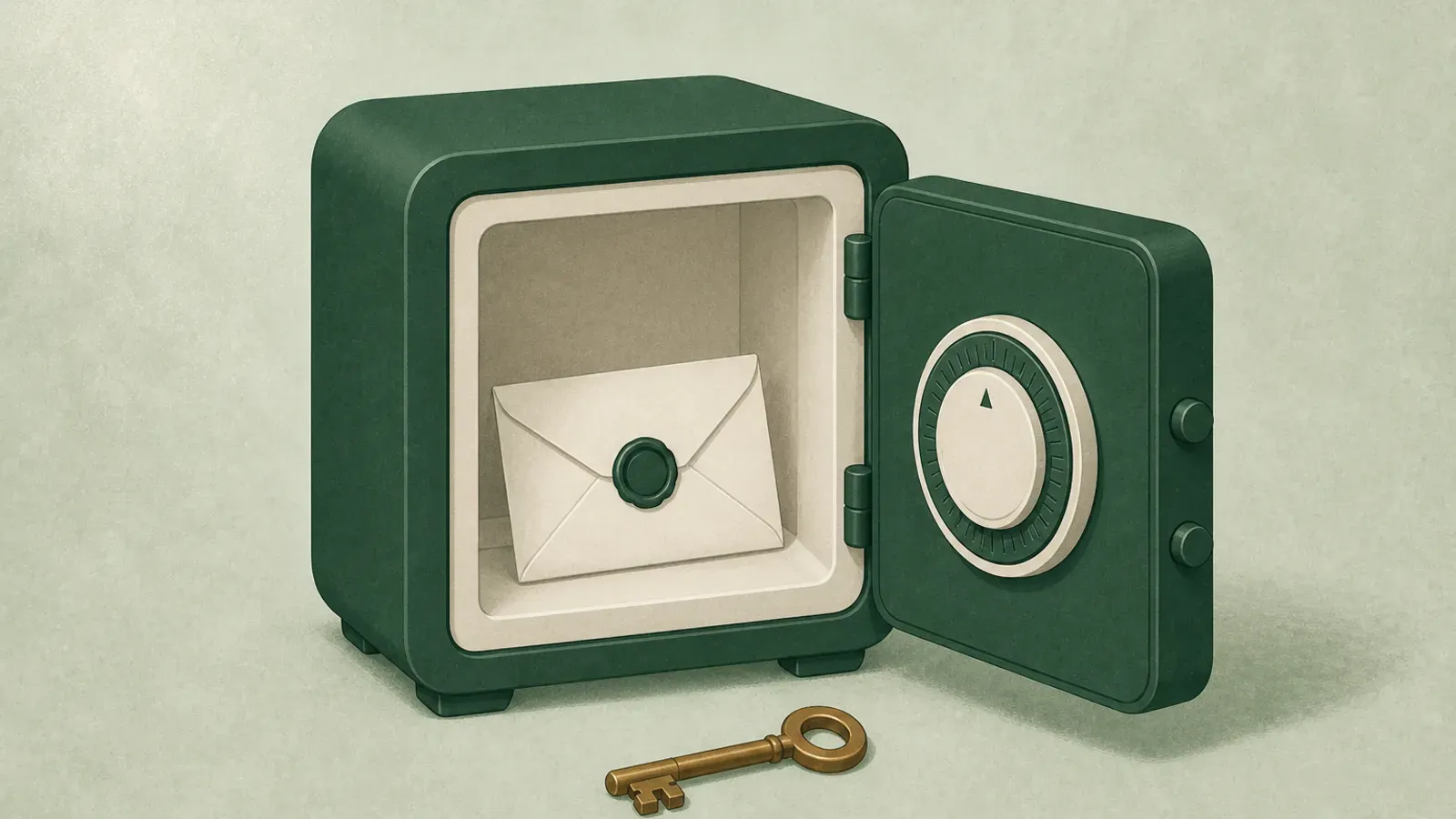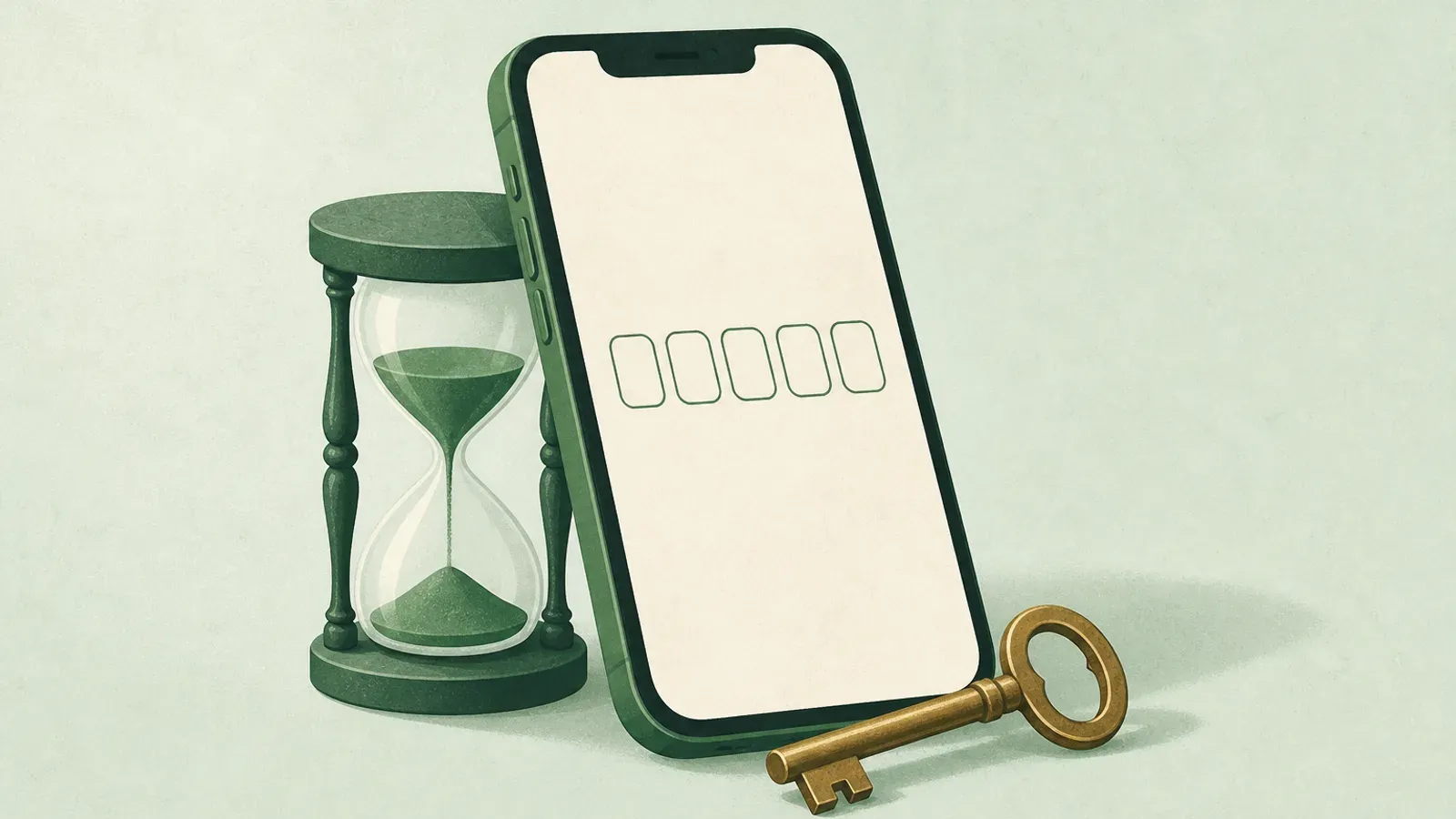
Crypto inheritance has one hard constraint that makes it different from every other kind of estate planning. The thing your people need later is the thing that must not be reachable today.
A bank account can be reached by an executor with a death certificate. A self-custodied wallet cannot. There is no institution to call. The seed phrase is the asset. Anyone who has it can move the funds today, with no bank to call and no undo.
So the problem is not "how do I store a seed phrase." It is "how do I make a seed phrase reachable at exactly one future moment and not before."
The approaches people actually use
Tell nobody. Extremely common, and it is why a meaningful share of all Bitcoin is permanently gone. This is not a plan. It usually means the asset stays unreachable forever.
Write it down and hide it. A metal plate in a safe, a card taped behind a drawer. Better than nothing, and it has two failure modes that both happen. Either nobody finds it, or the wrong person finds it while you are still using the wallet.
Tell a family member now. Solves discovery, creates a permanent trust dependency and a permanent attack surface. Also puts that person at risk: they now hold something worth stealing, and other people may come to know it.
Split it with Shamir backup. Trezor and some other setups support splitting a secret into shares where any threshold, say three of five, reconstructs it. Genuinely strong. The failure mode is coordination. Five people must keep five shares safe for decades, understand what they hold, and be findable and cooperative at the same moment years from now. Families change. This works best with a small, stable, technically literate group.
Bank safe deposit box. Reliable storage, awkward access. Box access after death depends on jurisdiction, how the box is titled, and whether your executor has authority. It can take weeks and sometimes a court order. It is also a single physical point of failure.
Multisig with an inheritance key. The most technically correct answer. A 2-of-3 setup where your heir or a service holds one key means no single party can move funds alone, and your heir's key becomes useful only combined with another. Excellent security properties, real setup complexity, and it requires your heirs to eventually operate a multisig. Most families cannot.
Leave, check-in, and claim. Store the seed encrypted, with a rule that it becomes reachable to a named person only after you stop responding for a defined period. This is what a dead man's switch does, and it is the approach that maps most directly onto the actual constraint.
What separates a plan that works from one that does not
Whatever you choose, the same five things decide whether it survives contact with reality.
Nobody can act early. If your heir can reach the seed today, you do not have an inheritance plan. You have a shared wallet and a promise.
You can cancel. Any mechanism that can fire must be reversible by you, easily, from anywhere. Otherwise a missed email during a hiking trip becomes an irreversible disclosure.
Your heirs know something exists. This is the single most common failure. The plan is perfect and nobody knows to look. You do not have to tell them what or where. They have to know that there is something and that it will reach them.
It includes instructions, not just the secret. A twelve word phrase means nothing to someone who has never held crypto. They need to know what wallet software to install, that the phrase must never be typed into a website, that anyone offering to help recover it is stealing from them, and roughly what the holdings are. Write it for someone who has never heard the word "seed phrase."
It survives you being wrong about the timeline. Plans that depend on you doing something later, when you are older, mostly do not happen.
The honest tradeoffs
There is no option here without a cost.
Shamir and multisig give the strongest security and demand the most from your heirs. Physical hiding is simple and fails silently. Telling someone now is simple and permanently transfers control. Leave, check-in, and claim removes the trust and coordination burden but means an encrypted copy of the secret exists somewhere, so the encryption and the release rules have to be right.
Pick based on who your heirs actually are. A technically capable spouse can run a multisig. Adult children who do not own crypto cannot, and a plan they cannot execute is not a plan.
Where HeirVault fits
Direct version, since this is our site.
HeirVault holds the seed phrase, the wallet notes, and the plain-language instructions as encrypted items. Your live vault is protected by end-to-end encryption and encrypts in your browser before upload. That means HeirVault stores ciphertext and cannot decrypt your live vault.
Release is cancellable. You check in on a schedule you set. Miss one and a waiting period begins, with notices to you the whole time. Check in at any point and everything stops. If the waiting period passes, the contacts you named can claim what you set aside for them.
For crypto specifically, two details matter. You choose your delivery mode, and if you want the handoff to stay end-to-end to your beneficiary, you can enroll them now or share a unique beneficiary password with them out of band. HeirVault-assisted delivery is the convenient option, but it stores a protected handoff key and transfers it to the beneficiary account after claim, so that path is not end-to-end to the beneficiary alone. For a seed phrase, choose deliberately. The security page spells out each mode.
If you are forced to unlock under threat, the Shield plan includes a duress password: a second password for when you are forced to unlock.
Start free or read the crypto handoff page.
One last thing
Whatever you pick, write your heirs a letter in plain language that explains what they have, what it is worth, what to install, and what scams to expect. The cryptography is the easy part. Someone who has never used a wallet, reading twelve words with no context, is where most plans fail.
This is general information, not legal advice. Rules differ by country and state. Talk to a qualified professional about your own situation.