Could your family unlock your phone tomorrow?
Not the legal version of the question. The Tuesday version: the phone that unlocks your bank app, the bills that keep coming, the password manager nobody else can open.
That gap is why we built HeirVault. Today it is open. You can create an account, and the free plan is $0.
This post is the whole picture: what the product does, what ships today, and the one boundary in our design that we would rather explain ourselves than have you discover later.
What HeirVault is
HeirVault is a vault for the day someone has to find what you left behind.
You put the things your people would actually need in one place: documents, logins, bank details, files, a copy of the will, the note that explains where everything else is. Then you name who receives what. Your sister gets the house folder. Your co-founder gets the domain logins. Nobody is handed everything.
Then you check in, on whatever rhythm you pick. The default is every thirty days, and a check-in is a small thing: a click, a sign-in, any real sign that you are still here.
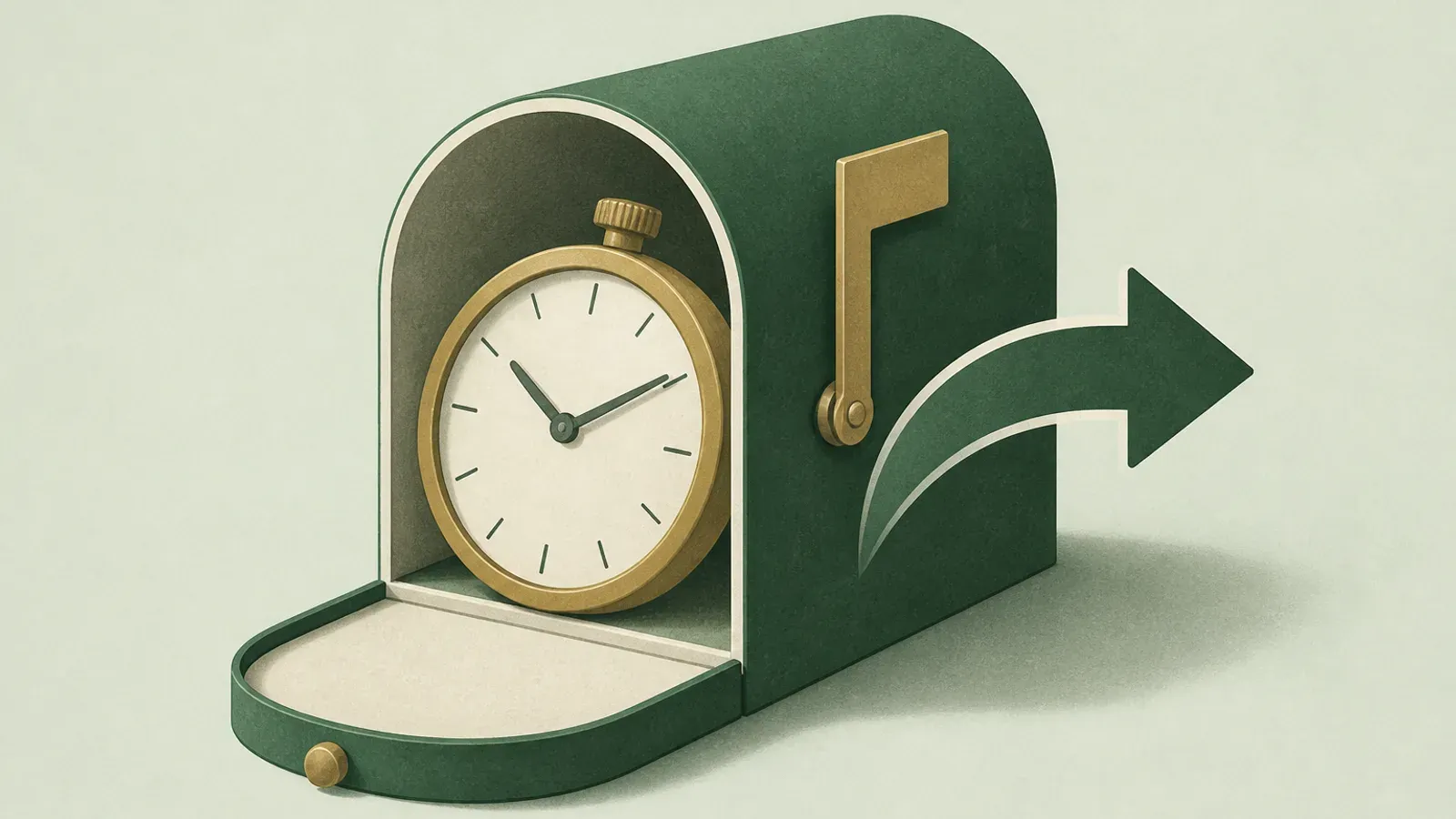
Nothing opens while you keep checking in. Miss enough and a waiting period starts, with reminders the whole way down. Any single check-in during that window cancels it. If the waiting period runs out, the people you named can claim the items you assigned to them, and only those.
Absence, not death
HeirVault detects missed check-ins. It does not detect death, and we think that is the right design, not a limitation.
Proof of death takes time. Probate takes longer. Families usually need context in the first week, while bills are still moving and accounts still work: which insurance policy, which bank, what the phone passcode is, who to call. A system that waits for paperwork waits past the moment it was supposed to help with.
So the trigger is silence on a schedule you chose, buffered by a waiting period and reminders, and cancellable with one click because you were on a plane, or in a hospital bed and fine a week later. We wrote more about the mechanism and its failure modes in how a dead man's switch actually works.
The two requirements that contradict each other
The hardest part of building this was not the interface. It was that the two core requirements point in opposite directions.
The content has to be unreadable to us. And it has to become readable to a specific person at an unknown future date, when the one person who knew the password is by definition unavailable.
Everything in HeirVault follows from that tension.
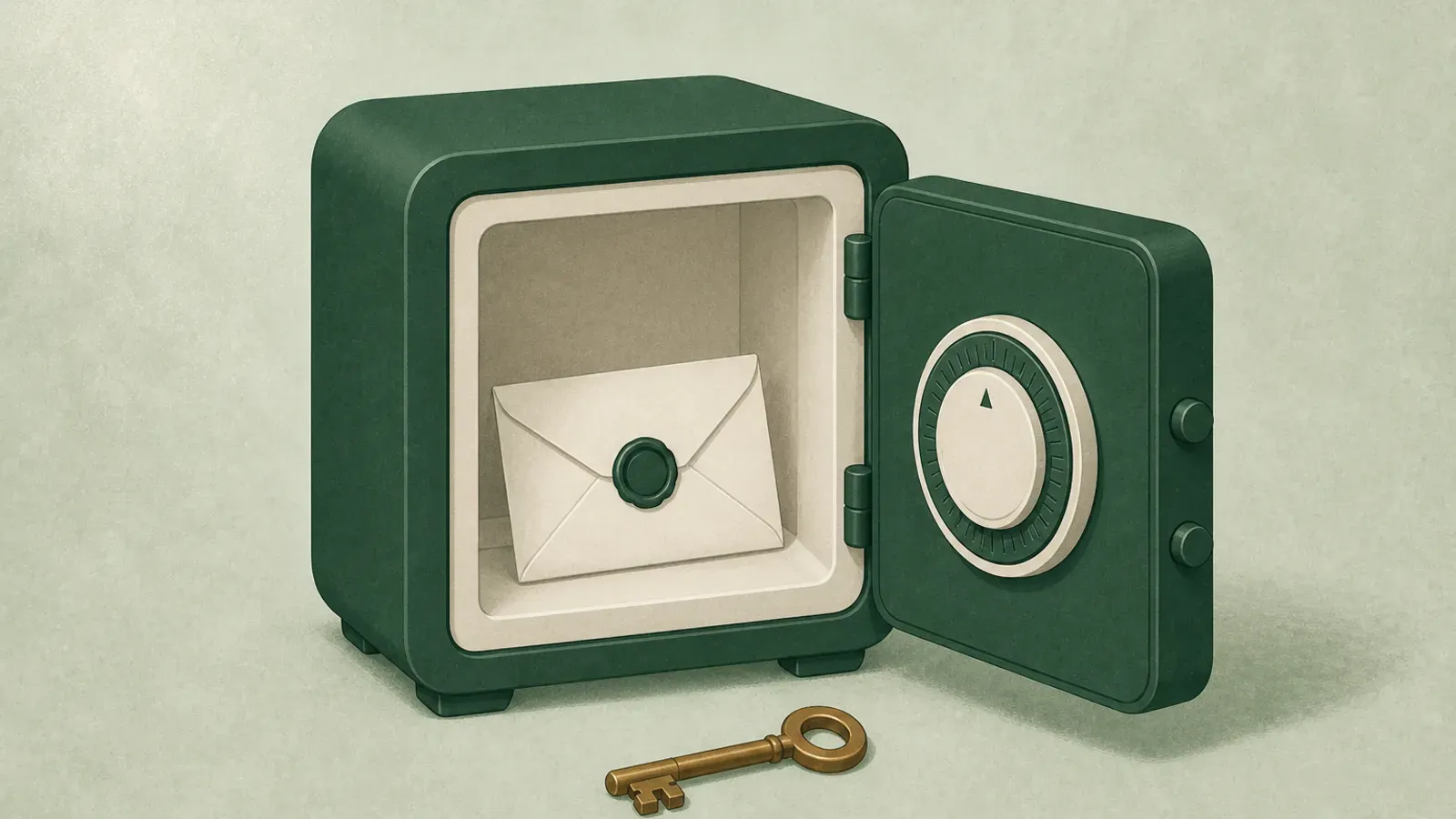
Your live vault is protected by end-to-end encryption. It encrypts in your browser before upload, so what our servers store is ciphertext we cannot decrypt. Even file names are encrypted before they leave your device.
Each person you name gets their own packed box: a separate encrypted snapshot of just their items, built in your browser under its own key. One packed box per person, not a copy of everything.
The cryptography for the live vault is open source at github.com/TrueWear/heirvault-crypto, so you can read exactly what runs in your browser rather than take our word for it. The full product is not open source, and the library has not been third-party audited yet. When that changes we will say so here.
The boundary we state up front
There are three ways a packed box can reach someone, and one of them is deliberately not end-to-end to the beneficiary alone.
If the person you name already has a HeirVault account, or you hand them a password yourself out of band, the handoff is end-to-end. We are out of the loop.
But some people want to name a beneficiary who has never heard of HeirVault and should not have to think about it until the day it matters. For that case, assisted delivery stores a protected handoff key on our side and transfers it to the beneficiary account after their claim is verified. That path is not sealed to them alone, and the product tells you so at the exact moment you choose it.
We could have averaged the three modes into one impressive-sounding claim. We would rather you pick the mode with its real trust properties in front of you. The full detail lives on the security page.
What ships today
The free plan is $0 and it is a real plan: vault, up to three beneficiaries, 500 MB of encrypted storage, check-in schedules from seven days to a year, and a fixed fourteen-day waiting period. For a lot of people that is the whole job.
Pro adds room and control: more storage, up to thirty beneficiaries, witnesses who must approve a release by majority, milestone unlock dates, and tighter waiting periods. Shield is for people whose threat model includes being made to open the vault: a duress password that opens a decoy and raises a silent alert, device check-ins over an API, and check-in intervals down to a single day. Plans and prices are on the pricing page, and yearly Pro and Shield start with a fourteen-day trial.
Two tools need no account at all, because the first step of this problem is a list, not a product: the digital estate checklist and the check-in calculator. Both run in your browser and are genuinely useful on their own.
Who this is for
For families, it is the difference between inheriting clarity and inheriting a scavenger hunt. For founders, it is the domain, the registrar login, and the production credentials that exactly one person can reach. For people who hold their own crypto, it is the way out of the bind where telling nobody loses the coins and telling everybody loses the point. For journalists and people at risk, it is a contingency handoff that stays sealed while you keep checking in.
If your password manager already offers emergency access and it covers your situation, use it. We mean that. HeirVault is for everything that sits outside one vault, and for handoffs that need to be per-person rather than all-or-nothing.
What happens next
Today we open. This week we answer questions in public, plainly, including the uncomfortable ones: what happens if we shut down, who holds which key and when, and what breaks if you forget your password. The continuity page answers the first one in writing.
If you have been waiting, sign-up is open. If you are not ready to sign up for anything, take the checklist. It is the part of this that everyone should have, whether or not they ever pay us.
Leave what matters, to the people you love. They can claim when you cannot.
This is general information, not legal advice. Rules differ by country and state. Talk to a qualified professional about your own situation.